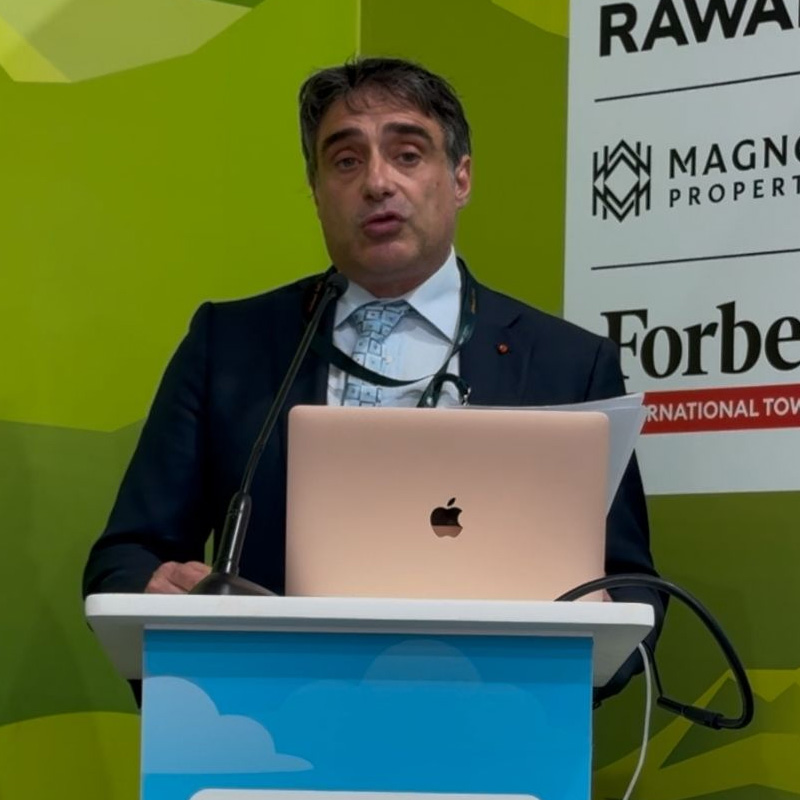
Dear guests and colleagues, my heartfelt gratitude goes to the Saudi Green Building Forum for this gracious invitation to open today’s work as the President of the Institute for Advanced Studies and Cooperation and the founder of the World Changers Summit.
At the Institute, we are dedicated to creating a holistic and flourishing healthy and regenerative systemic ecosystem. This challenge extends beyond mere food production or land regenerative actions; it encompasses fostering human health, preserving our environment, and ensuring equitable access to resources wile building and ethical social conscience.
in this Public-Private Partnerships (PPPs) could serve as a critical instrument in achieving these goals, offering a collaborative framework that unites the strengths of governments, private enterprises, and non-profit organizations.
Food is far more than sustenance; it is a cornerstone of health and well-being. It has the power to nourish and cure, yet it can also harm when mismanaged or misunderstood. Today, the global food system faces a dual crisis: hunger on one hand and the proliferation of diet-related diseases on the other.
Poor diets lead to basal inflammation, a root cause of many chronic health issues, while inadequate agricultural practices exacerbate environmental degradation. To combat this, we must embrace a paradigm shift—one that prioritizes knowledge-based farming and nutrition. Sharing accurate information and promoting awareness are foundational steps in preventing both health pathologies and ecological disasters. Through collaboration, PPPs can act as catalysts for innovation in agricultural technology and research. Precision agriculture, agroecology, and biotechnology are just a few examples of cutting-edge fields that can revolutionize productivity and sustainability. At the Institute for Advanced Studies and Cooperation, we are working on cutting-edge solutions with our partners, such as the use of Holographic Information Transfer Technology (H.I.T.) using low-frequency signals to cure different plant cultures from parasites, promote the expression of certain qualities in others, or enhance flourishing and germination using Bluetooth signals. Thanks to the research we are fostering with the Italian tech group SIPAL, we are looking into more automated, manageable, and knowledgeable solutions for farming through the use of a digital AI platform managing drones and evaluating real-time information and images from satellites.
Another exemplary collaboration that benefits all stakeholders and humanity is “The Project Plat Blue,” led by visionary entrepreneur Karl Nagy. The idea was to transform water hyacinths, an invasive and destructive plant, into a highly valuable source of renewable energy, producing organic fertilizer as a by-product. In addition to restoring the vitality of the ecosystem, the project generates biogas (for cooking), potable water for local communities, carbon certificates to mitigate climate change, and numerous jobs to empower local and regional economies, thereby enhancing living quality while generating significant economic returns. As demonstrated repeatedly, international partnerships in research enhance the accuracy of findings, accelerate the development of advanced solutions, and minimize inefficiencies and errors. Moreover, these collaborations promote equitable and transparent solutions, ensuring that the benefits of innovation are distributed fairly across all segments of society.
Public-Private Partnerships offer a powerful mechanism to bridge the gaps between finance, agriculture, and medicine, thereby creating a thriving and holistic food ecosystem. These partnerships enable the pooling of resources, expertise, and innovative solutions to address complex challenges.
Environmental Conservation: Sustainable agricultural practices supported by PPPs can protect natural resources, reduce greenhouse gas emissions, and combat climate change.
Rural Development: By integrating advanced technologies and providing financial support, PPPs can empower rural communities, ensuring equitable access to modern farming methods and markets.
Food Security and Health: Beyond mere food production, PPPs must focus on delivering food that nurtures cellular health rather than exacerbating medical issues. Addressing food security requires a focus on “good molecules”—nutrient-dense foods that prevent disease rather than perpetuating cycles of poor health and increasing healthcare costs.
The Vicious Cycle of Financial Aberration and Speculation needs to be broken. It is imperative to acknowledge a harsh reality: our current system often shifts the problem of hunger to the realm of healthcare, creating an unsustainable economic burden. Producing food without addressing its nutritional quality fosters a vicious cycle that does not solve the root issue but instead exacerbates it. Today, we have the technology, the means, and the knowledge. What we often lack is the will and capacity to disrupt entrenched systems of financial aberration that prioritize short-term profits over long-term well-being. When we talk about food security, we must do so with a clear understanding of its deeper implications. This is not just about filling stomachs; it is about nourishing lives. We must ask ourselves: Are we truly addressing hunger, or are we simply shifting the problem to healthcare systems already burdened by preventable diseases?
The path forward demands collective action. We need to channel our resources, technology, and knowledge into breaking the cycles that perpetuate inequality and environmental harm. By fostering a spirit of collaboration and innovation, we can create a food ecosystem that not only sustains life but enhances it.
As we convene in Riyadh, let us reaffirm our commitment to building a better world. Public-Private Partnerships provide us with the tools to bridge gaps, drive innovation, and create lasting solutions. Together, we can build a future where food is a source of health, flourishing, and hope fighting desertification and promoting environmental flourishing,
Thank you.