
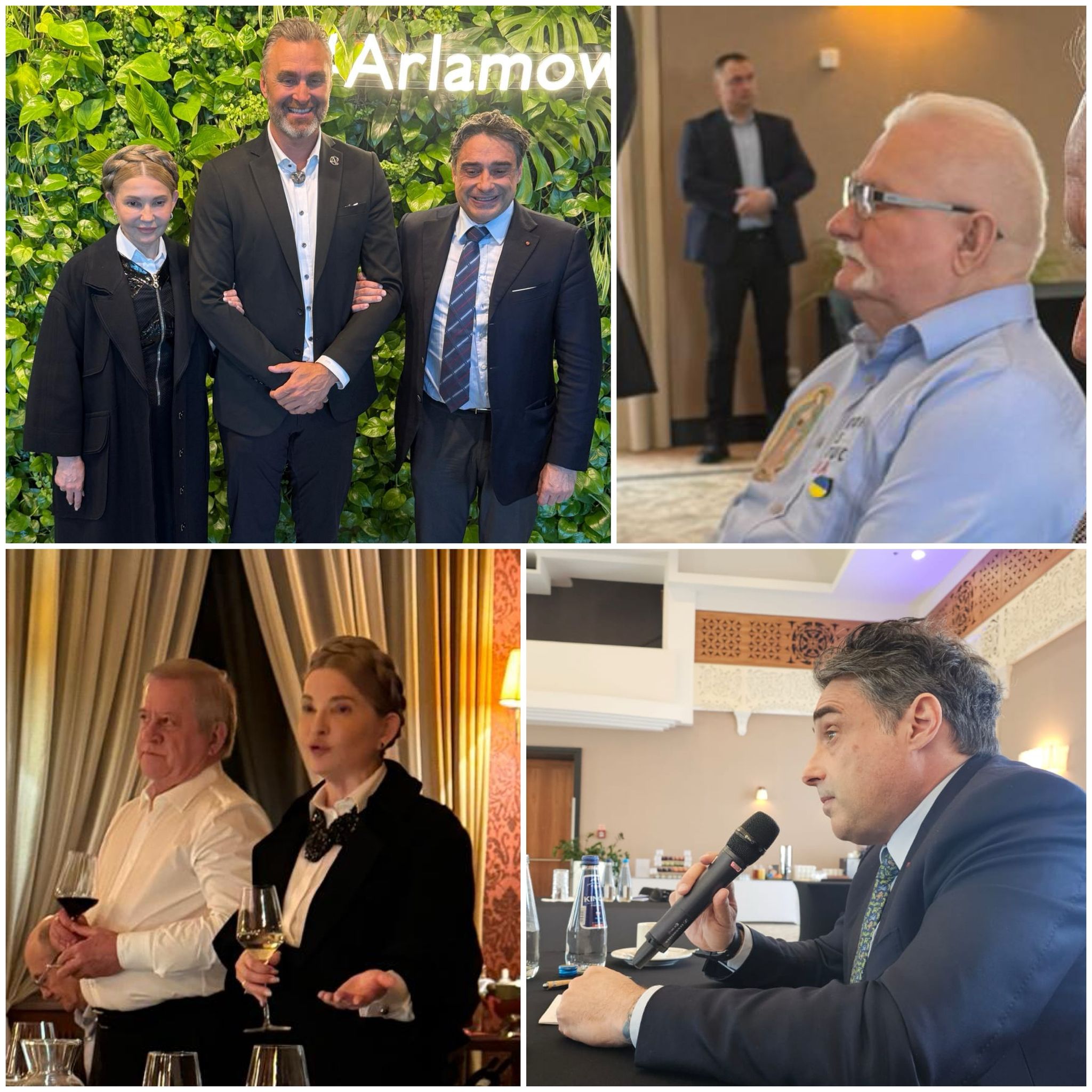
Over the past few days, I had the profound honor of participating in the World Changers Humanitarian Emergency Meeting in Poland, following critical consultations in Ukraine. This gathering was more than just a high-level meeting; it was a testament to global solidarity, a powerful convergence of leaders, policymakers, and business minds committed to one urgent cause—ensuring immediate relief and long-term stability for the people of Ukraine.
Held at Hotel Artamów on March 5-6, the meeting brought together some of the most distinguished figures in politics, business, and humanitarian aid, including Lech Wałęsa, Yulia Tymoshenko, Anatoliy Kinakh, Hryhoriy Nemyria, and other key international stakeholders. Together, we addressed not just the immediate humanitarian crisis but the long-term path to economic and democratic resilience for Ukraine.
The Urgency of Action
As I listened to the voices of leaders from Ukraine, Poland, and beyond, the magnitude of the crisis became even more palpable. The statistics alone—millions displaced, infrastructure in ruins, and a country fighting for survival—fail to capture the human cost of this war. Each displaced family, each child unable to attend school, each doctor working without adequate medical supplies, is a reminder that we must act with greater urgency.
In the meeting, we tackled the core challenges head-on:
•Delivering immediate humanitarian aid—from medical supplies to food and energy resources.
•Rebuilding essential infrastructure—hospitals, schools, and public services.
•Supporting Ukraine’s democracy—by reinforcing legislative frameworks that will help stabilize and revitalize the nation’s governance and economy.
•Strengthening global partnerships—mobilizing public and private sectors to invest in Ukraine’s recovery beyond the crisis.
Beyond Aid: Building a Future
While humanitarian assistance remains our immediate priority, our vision extends beyond emergency relief. Ukraine’s future must be built on a foundation of democracy, economic growth, and international cooperation. For this reason, our discussions emphasized the role of legislation, investment, and innovation in shaping a country that can thrive beyond the war.
I firmly believe that businesses, institutions, and governments must work together—not just to send aid, but to create opportunities, jobs, and sustainable development for Ukrainians. This is not about dependence on humanitarian relief; it is about empowerment and long-term self-sufficiency.
My Commitment Moving Forward
Leaving this meeting, I am more committed than ever to ensuring that our humanitarian efforts evolve into real, lasting change. Through the Institute for Advanced Study and Cooperation (IASC), I will continue to push for stronger global partnerships, ethical technological advancements, and policies that bridge the humanitarian and economic divide.
This is not just Ukraine’s fight—it is a defining moment for all of us. If we are truly committed to human dignity, democracy, and peace, we must act not only as individuals but as a united international force.
I call on leaders, businesses, and global citizens alike to step up, to contribute, and to ensure that Ukraine is not just rebuilt, but reborn.
This is our responsibility. This is our legacy.
Join the Movement
For those who wish to get involved—whether through humanitarian efforts, advocacy, or economic collaboration—reach out, engage, and make a difference. The future of Ukraine depends on the actions we take today.
With determination and solidarity,
Sir Prof. Gabriele Pao Pei Andreoli